Introduction
We love our pets and they are an integral part of our families, but did you know that the carbon foot print of our pets can be the equivalent of our household electric? Read on to find out about the issues and what can you do.
Diet
Being sustainable is about so much more than recycled, compostable poop bags, in fact, the major impact on your pets carbon foot print comes from their diet! This is because they are fed meat which means raising animals specifically for the pet food industry. What simple things can you do?
Well, it may sound silly, but actually in the UK one of our dogs biggest health issues is obesity, so if nothing else check with your vet whether you could reduce your carbon footprint as well as benefiting your dog’s health.
Skipping the beef option may be another way to reduce their carbon footprint, because gram for gram, beef has the highest carbon footprint.
These are both so simple that really everyone could consider either or both of them.
Special diets?
Truly special diets should only be attempted under the guidance of a canine nutritionist. But …. you might want to think about skipping the ‘fancy’ human grade dog food which will add to the number of animals being raised for consumption. Although this may have a knock on impact on your pets health – or it might not?! Dogs may be able to survive very well on foods that are not human grade but do your research and check with your vet.
Here is an option that I do like though. You might also find that you can prepare some of their food yourself at home! Again, it needs to be properly balanced so you’ll need to plan carefully. But for a quick win think about this …. increasingly we are being encouraged to include at least some fresh fruit and vegetable matter in their diet and it seems to me that it is both more cost effective and more sustainable to prepare these ourselves. There are wide ranging recommendations out there on the proportion of vegetables to include and how to prepare them, so again, do your research.
There are also some fantastic complete vegan dog foods that come with veterinary recommendations, but again, do your research as not all vegan foods are truly complete.
Raw food may or may not be a great option for the health of our dogs, but raw food is often more expensive in terms of packaging and transportation which increases its carbon footprint. If you go ‘raw’ then look carefully at the packaging involved in the different options. Many come in plastic but some have now switched to cardboard.
“I’ve chosen to use a vegan complete kibble as training treats and in enrichment toys which is about 50% of their daily food allowance and the other 50% is raw! I figure it must be reducing our carbon foot print by about 50% without taking meat out of their diet completely”
Shopping for essentials
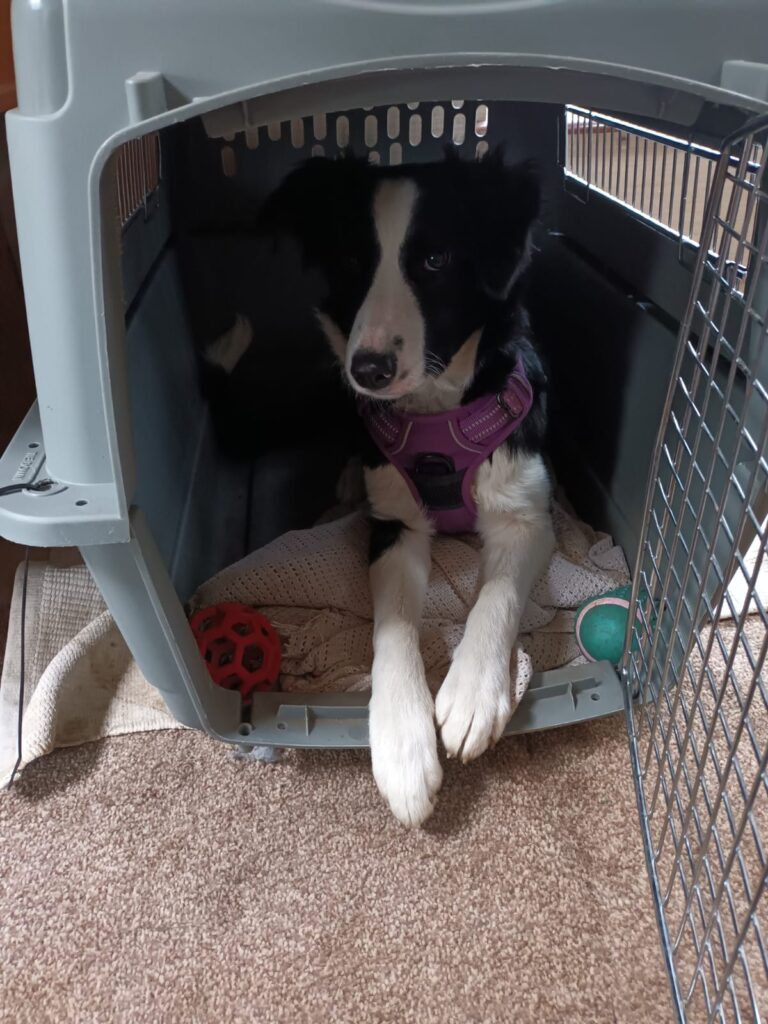
Re-use, donate and buy second hand the essentials for dog ownership. Many dog owners find that they go through five or more harnesses in the early days trying to get the right fit for their dog. If you’ve done this then feel free to donate your harnesses to a local charity shop or to me and I’ll offer them to new puppy owners. Probably the biggest item most new owners buy new is a dog crate and these are often re-sold by charity shops for just a few pounds. I also accept donated crates and give free to good homes so feel free to ask or donate.
Finally, there are wide range of variously environmentally friendly poo bags so these days it is a very simple step towards sustainability which we can all embrace.